A Stone Monument to Rare Coincidence


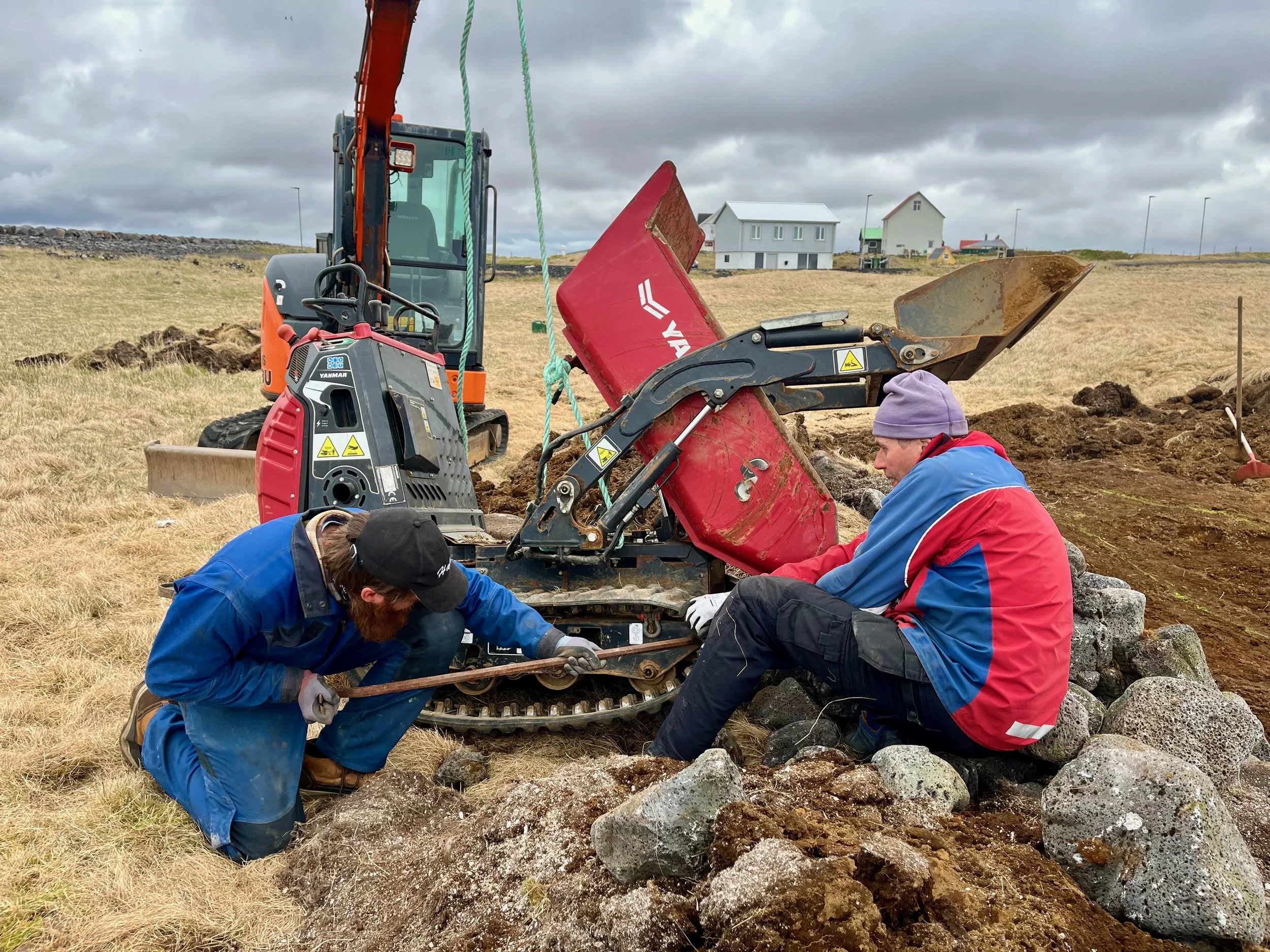


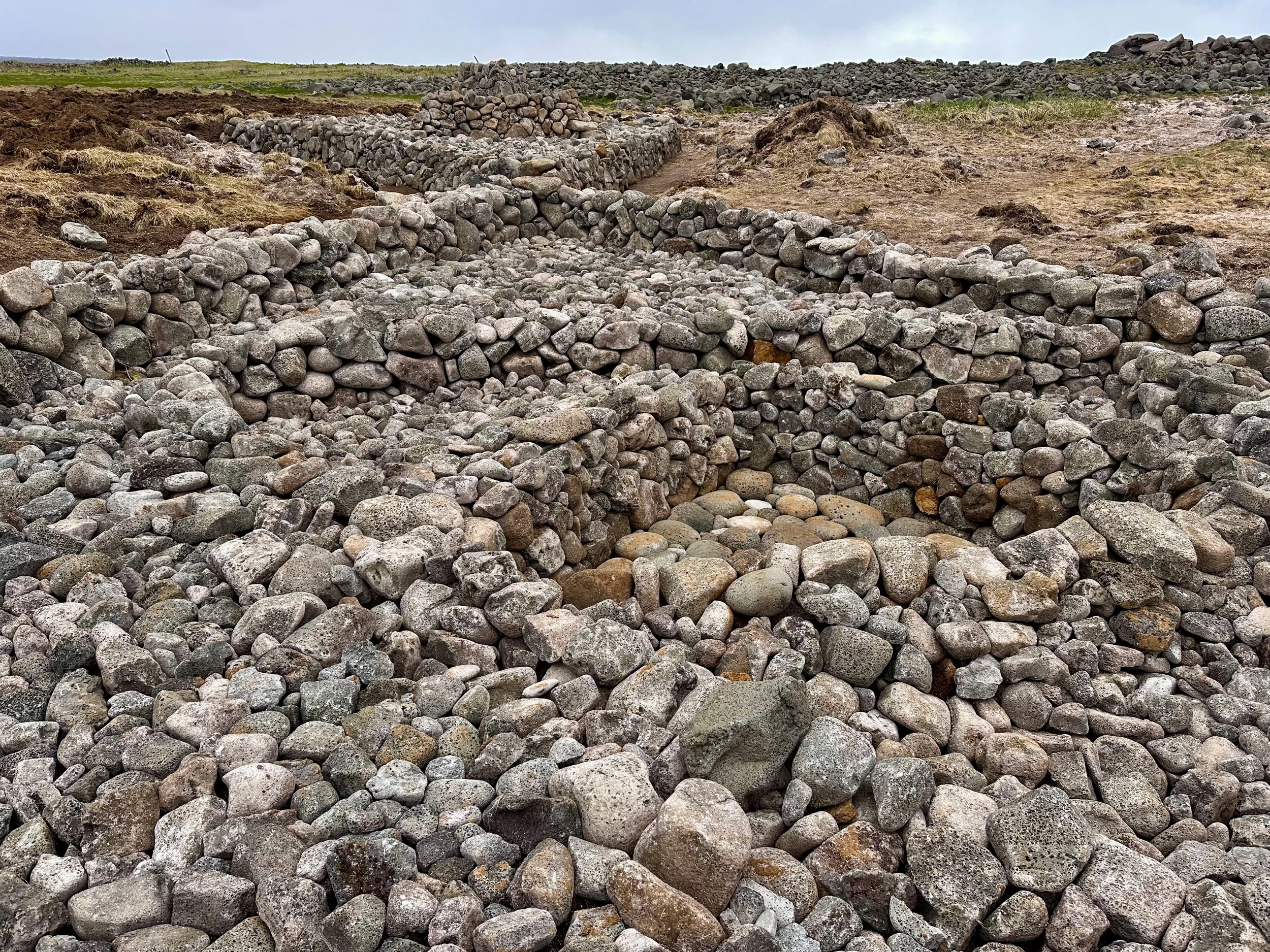

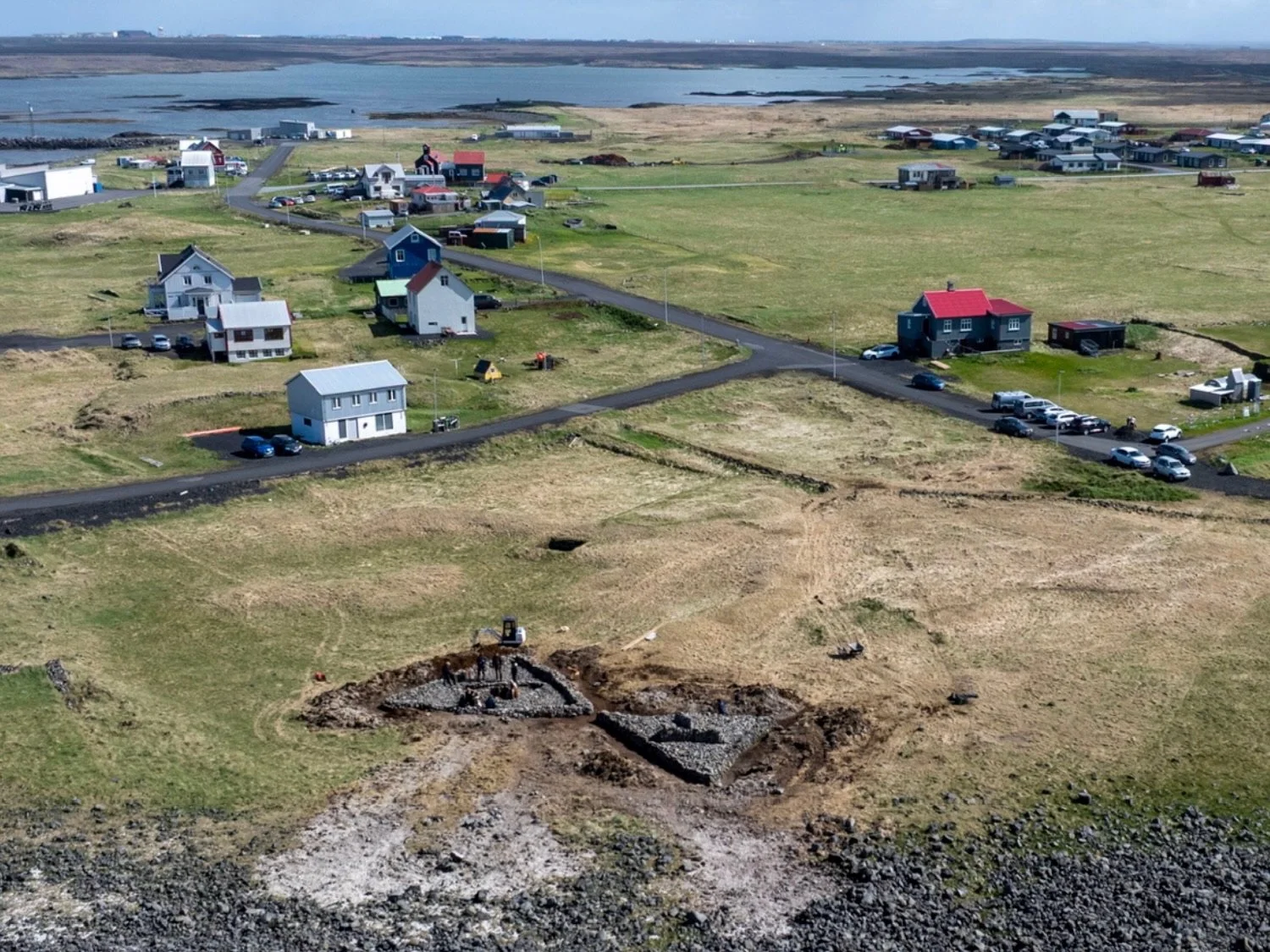

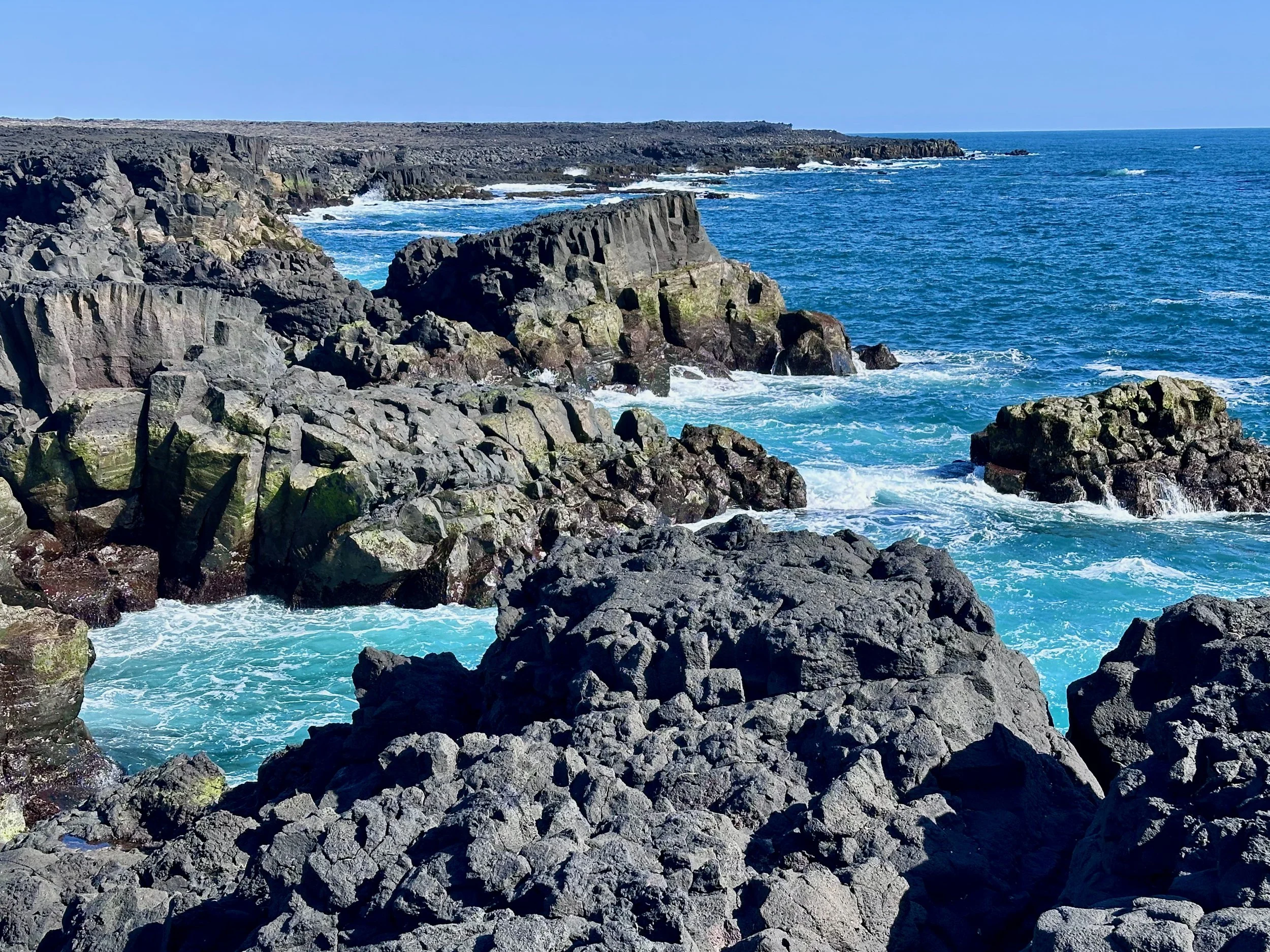
It wasn’t long into our initial video conversation about my instructing an art-making workshop that we both knew what we had to do. Sveinn Enok Jòhannsson had already convinced me that there would be ample stone, ready for collection. From a photo, it all looked a lot like what a Vermonter might call fieldstone. But it turned out there was a big difference because rather than the glacially-tumbled, geologic mix of stones found here in New England, Sveinn's stones were all lava rocks; ground smooth by countless ocean waves. Near his home on the southwest coast of Iceland every 15 years or so the sea surges and breaches the land’s edge. It flings tons of stones onto an old meadow and temporarily turns the ground into a saltwater lagoon.
Sveinn’s mission at the start was to parlay grant funds into an advertising campaign that would attract paying attendees. I charged myself with the task of doing some math. Before deciding what participants would build it was necessary to know how much they could build. How much stonework could two groups of 10 stone enthusiasts reasonably be expected to do during each of their three-day workshops? It was to be more of a hands-on learning lesson about land art than an instruction in the craft of dry stone walling. Building to a professional standard would be less important than having every participant in motion throughout the day. By just giving them a couple basic tips to get started, they could jump directly into laying stone and potentially have constructed a substantial structure by the workshop’s end.
With the abundance of materials and labor established in my mind, the next consideration would be for any limiting factors. The May weather conditions to be expected in the North Atlantic include sun, wind and rain, all with above-freezing temperatures. The participants, being Icelanders, would be unfazed by changeable weather and carry on with the work as long as their energy and interest lasts. A height limit of 3’ would be imposed on the sculpture design for the safety of those lifting stones. But that wouldn’t necessarily mean that the project couldn’t exceed 3’ in total height. If staged in modest lifts, the structure could have both great depth, below, and height above ground level.
To keep site preparation simple, no guide frames would be erected or string lines strung. Only a curving outline, spray painted on the ground, serves as an indicator of where the walls will go. To keep the degree of difficulty low, no right-angle corners would be included. Without the aid of frames and strings the participants are encouraged to use their eyes to gauge the development of wall batter and curve. Without the use of hammers and chisels to shape stones, individuals have to rely on their intuition for picking and placing stones as found.
If one participant was able to build 12 square feet of wall in a 6-hour day, 10 people working three days could produce 360 sq ft, or 180 linear ft of 2’ high wall. 180’ divided into three tiers of 90’, 55’ and 35’ each would gain 6’ of elevation above the ground plane. By making each tier triangular-shaped, three forms with side lengths of 30’, 18’ and 11’ are produced. Stacked atop one another, with a 90 degree twist at each level, a curious-looking object is manifest in the first workshop. For the second workshop the concept is spatially reversed; a negative impression of the first shape being built below grade.
For each group to build their own unique forms that would, in combination, create a large, new shape brings an intriguing complexity to the project The two groups pair their positive and negative objects into one unified edifice.
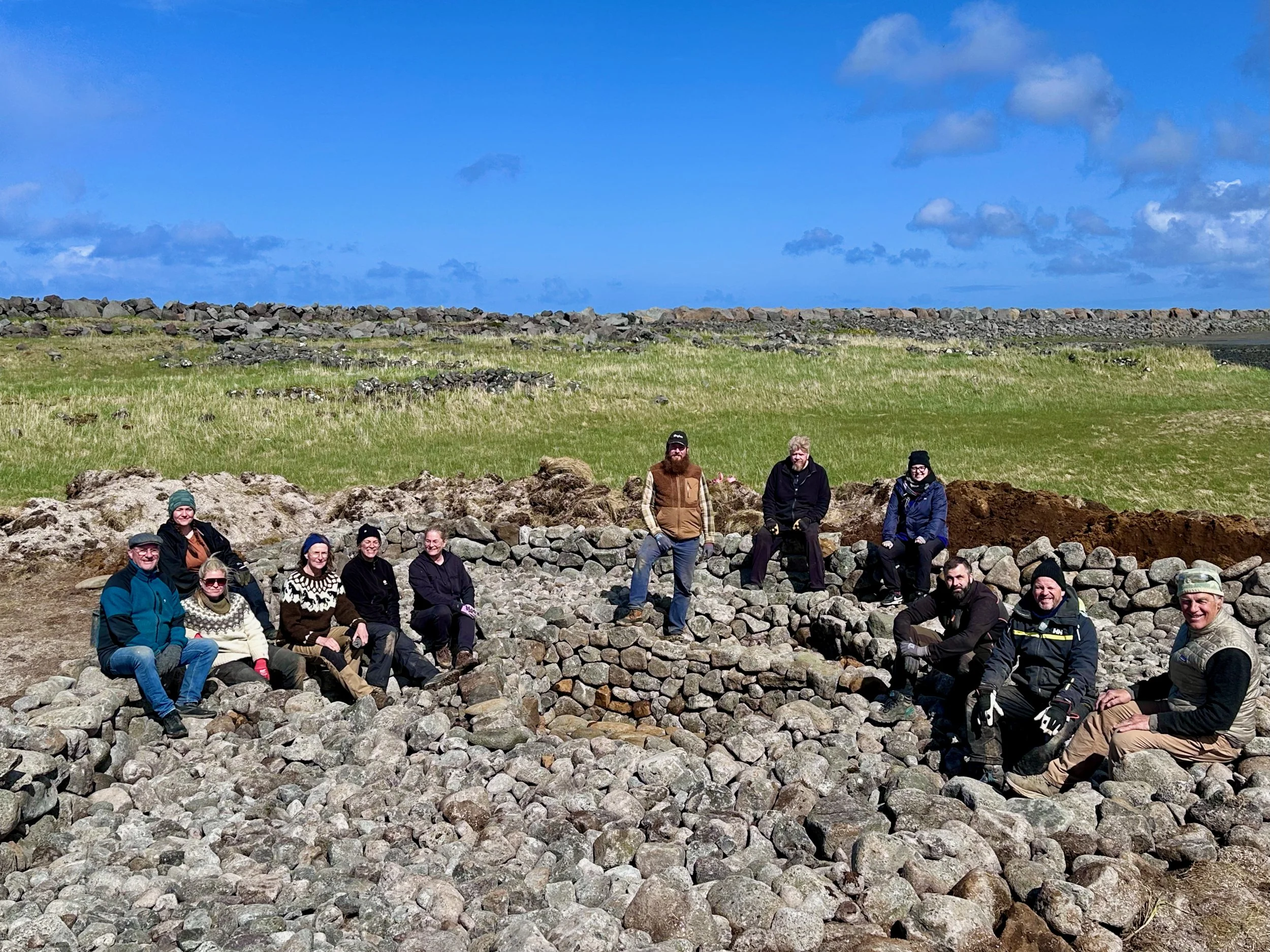
With a design program in hand and 20 people signed up, the time had come for Sveinn and I to meet. On my arrival in Iceland we hit the ground running. Digging footings and gathering stones occupied our days before and between the workshops. The weather was in our favor throughout. Although there were showers most days and wind blowing hard enough to knock us around on others, everyone pitched in with exuberance and made the project fun to the last stone laid.
It’s now two months after returning from our time in Hafnir, Iceland. Elin and I have vivid memories of windswept seascapes, coal-black lava fields and steaming hot springs. The people we met were strong individualists bound together by their geographic isolation. They’re open to unfamiliar ideas brought from afar about art, even to the extent of willingly devoting three days doing hard work to gain the experience of creating something new, by hand, in their homeland. The work is a rumination on the chance coupling of an extremely high tide with a ferocious westerly gale that causes an unexpected transformational phenomenon. ‘Monument to Rare Coincidence’ stands ready to witness the next occurrence.
We would like to extend our heartfelt thanks to all who joined the dry stone walling workshops in Hafnir: Bryndís Ísold Káradóttir, Þorgeir Starri Hermannsson, Bjarni Guðmundsson, Aðalsteinn Stefánsson, Sunneva Gunnarsdóttir, Katla Maríudóttir, Jóhann Ingvi Víkingur, Henry Fletcher, Unnsteinn Elíasson, Guðmundur Páll Atlason, Dagný Pétursdóttir, Håvard Lund, Elísabet Pétursdóttir, María Bjarnadóttir, Kristín Bjarnadóttir, Helena María Guttesen, Haukur Pálmason, Hjalti Örn Ólason, Guðmundur H Ásgeirsson, and Rakel Steinarsdóttir. We are deeply grateful for the community and spirit you brought to the landscape, and for the lasting contribution you made to this project.
One may wonder how a project like this comes about. It takes someone with a farfetched dream, a belief that anything’s possible and the vitality to overcome the inevitable stumbling blocks encountered along the way. Sveinn had all three in spades. His exuberant spirit uplifted every step in the process. Elin and I are grateful to him and his family, for generously welcoming us into their life and making us feel like honorary members of their community.