Prairie Trillium
Asked to give a presentation for the Ekdahl Lectures Visiting Professorship at Kansas State University, I wanted to offer the audience a view of the interior realm that’s sometimes explored by a waller while practicing their craft. I began with the word “duende”, defined by the Spanish poet, Federico Garcia Lorca as a way of working that’s “not a question of skill but of a style that’s truly alive: meaning, it’s in the veins: meaning, it’s of the most ancient culture of immediate creation.”
The “ancient culture of immediate creation” that Garcia Lorca spoke of is not just a poetic metaphor. As an example of how it manifests itself in the physical world I pointed to studies in Great Britain that have found that humans have a form of remote touch, or the ability to sense objects without direct contact, a sense that some animals have. Human touch is typically understood as a proximal sense, limited to what we physically touch. The findings confirm that people can genuinely sense an object before physical contact. Wallers with years of experience in the field can attest to that reality. The fingers reach for a stone without prompting from the mind. Remote touch has guided the hand to pick the stone that’s ripe for setting on the wall. The brain is only a receptor capable of very quick, but after-the-fact, reportage of the body’s sensorial experiences. It’s a pretender that likes to take credit for wise choices made that it actually had little to do with.
A waller’s exterior realm consists of stonework’s harsh reality; there’s a lot of heavy lifting involved. The paradoxical answer to “Why do such hard labor?” would be “Because after lifting I’m left lighter.” If feeling lighter is the point of lifting, what’s gained by setting a stone? Choosing, lifting and placing a stone is a manageably difficult job. Done one stone after another, hundreds of times during a work day, adds up to the creation of an object but more importantly it builds a series of satisfactions for the practitioner. Those many small goals attained accumulate and settle in the psyche as happiness.
It may seem counterintuitive to seek happiness through work but a job is actually great training ground for developing it because happiness is only ever a byproduct; a feeling that squeezes out from between the things you’re doing. Happiness is not about getting what you want or living with ease; it is living, from one hour to the next, at a level of just manageable difficulty.
I specifically addressed the students in the auditorium when I suggested that, as they prepare to enter a field, their studies are sufficiently arduous and that the work they finally engage with is no less than hard to accomplish. The easy stuff may speed their conquests but the real prize comes from hanging in there long enough to accumulate the happiness dividends that will help define who they’re meant to be.
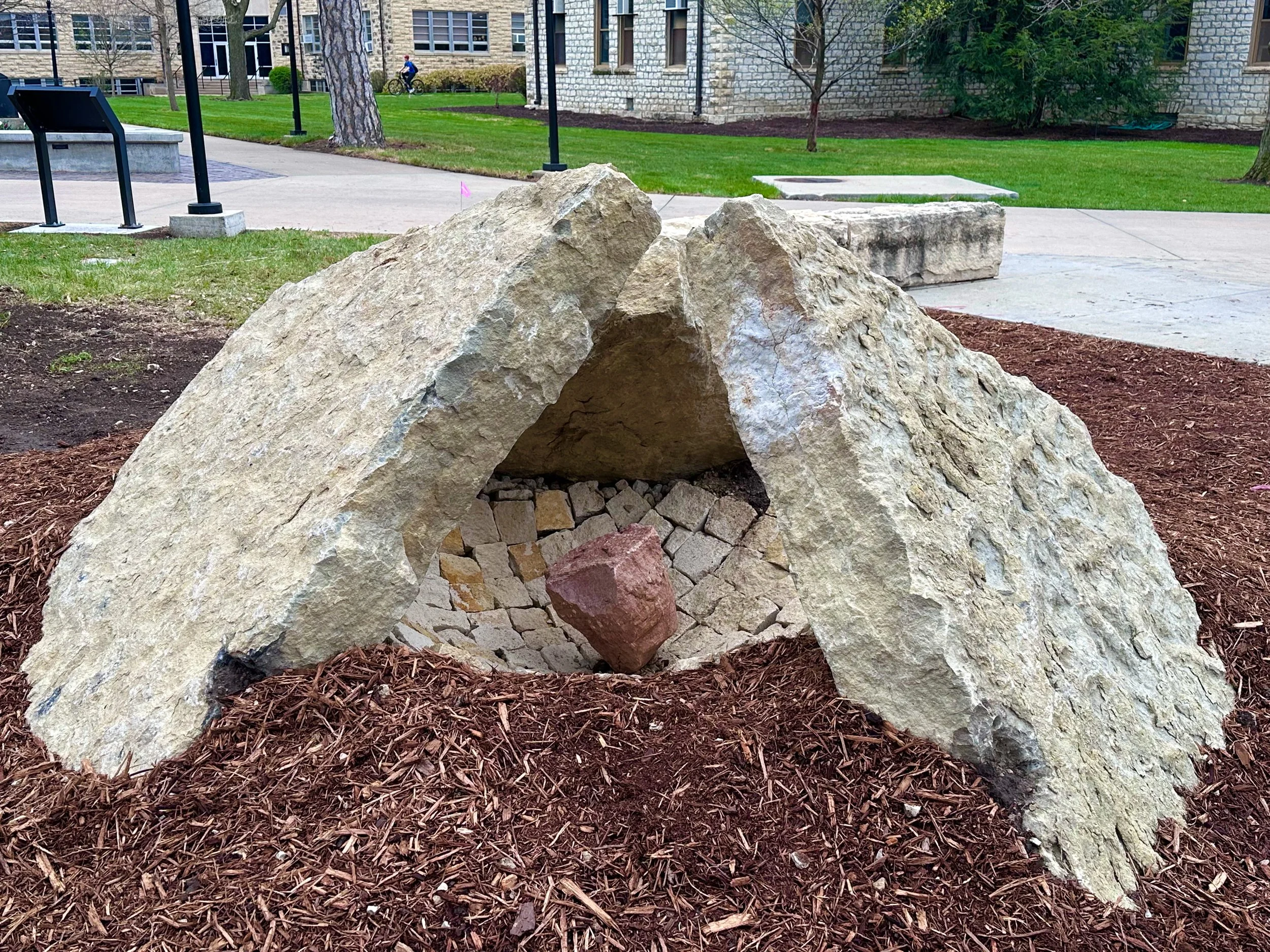
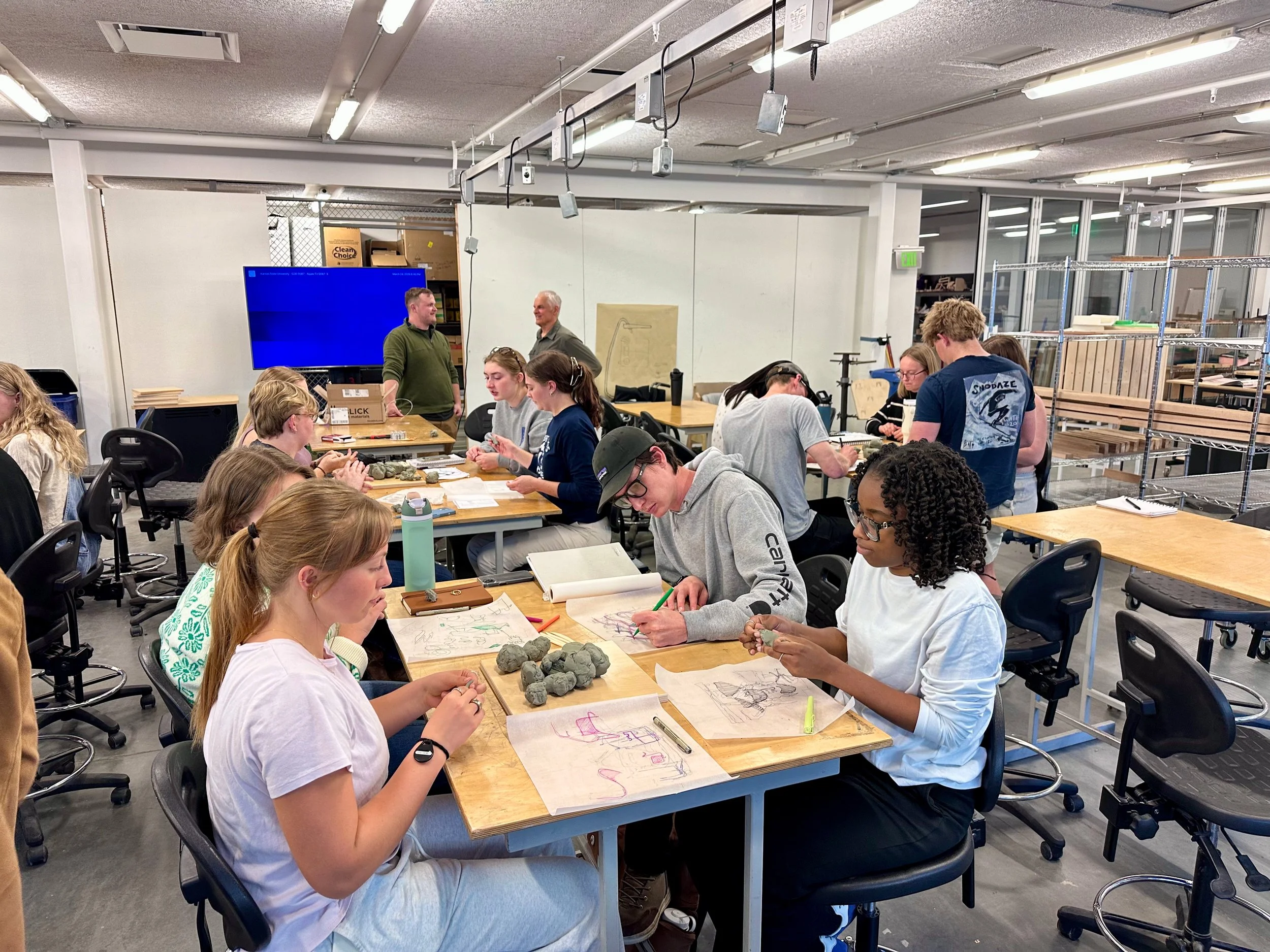
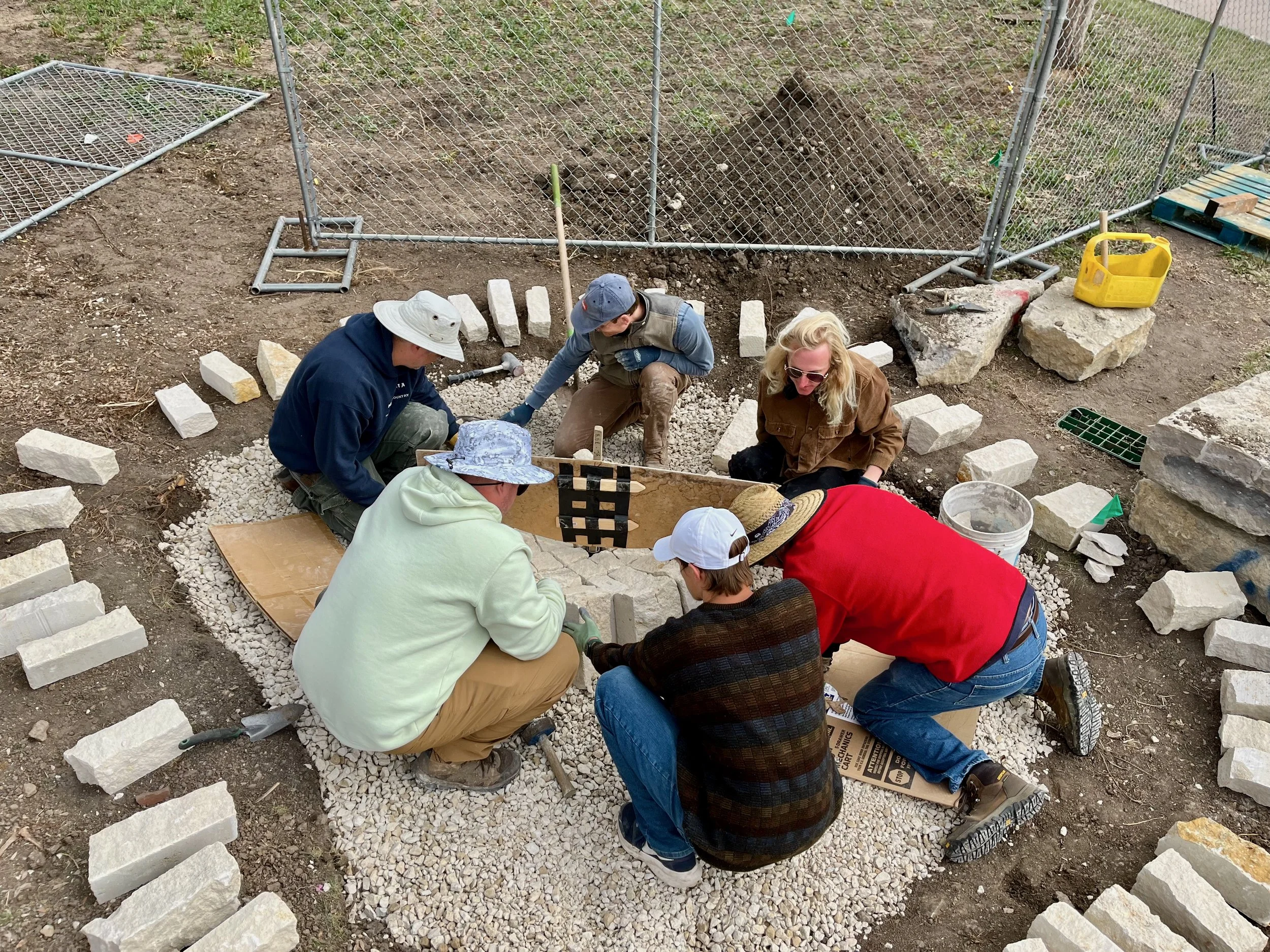
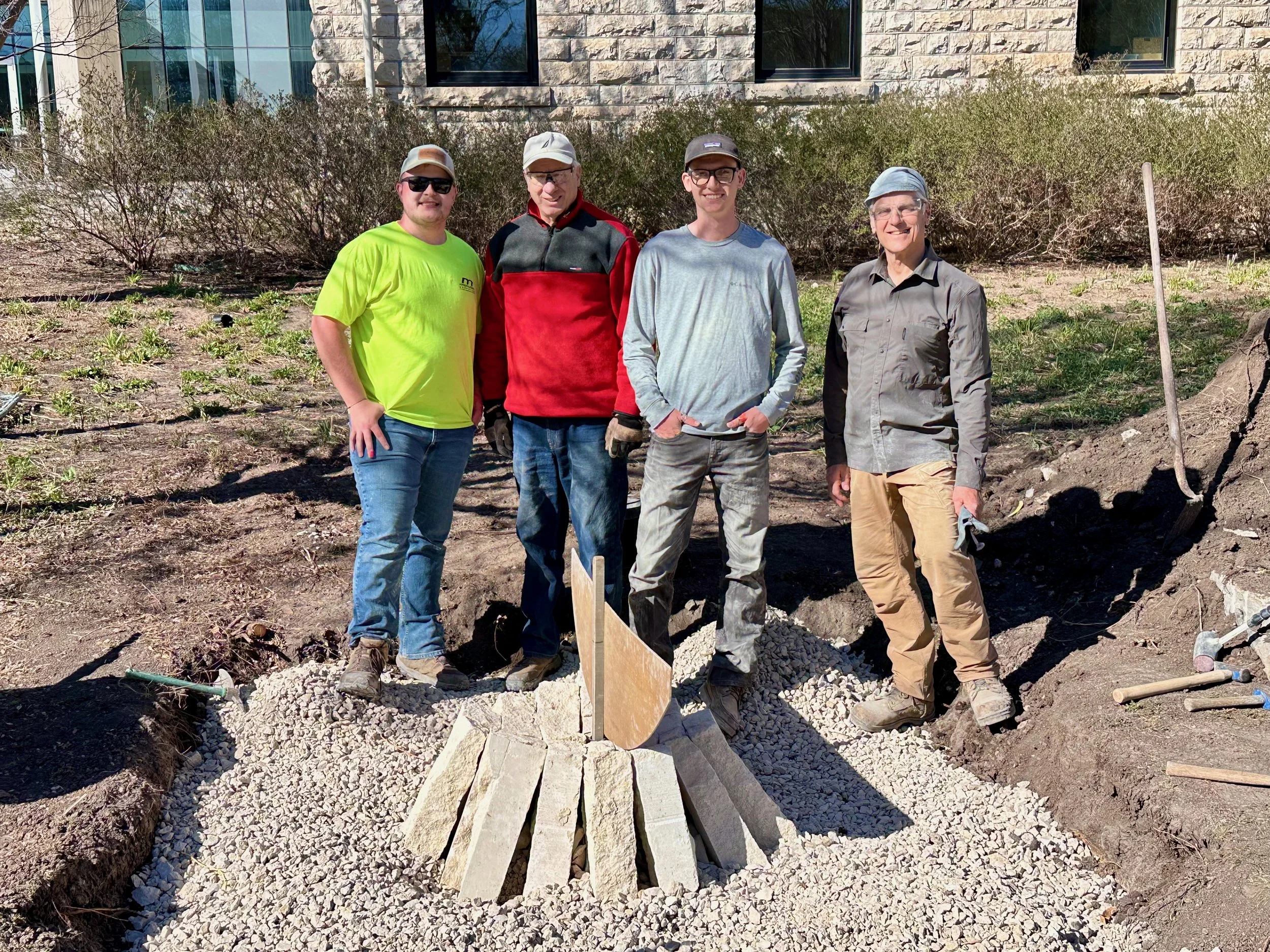
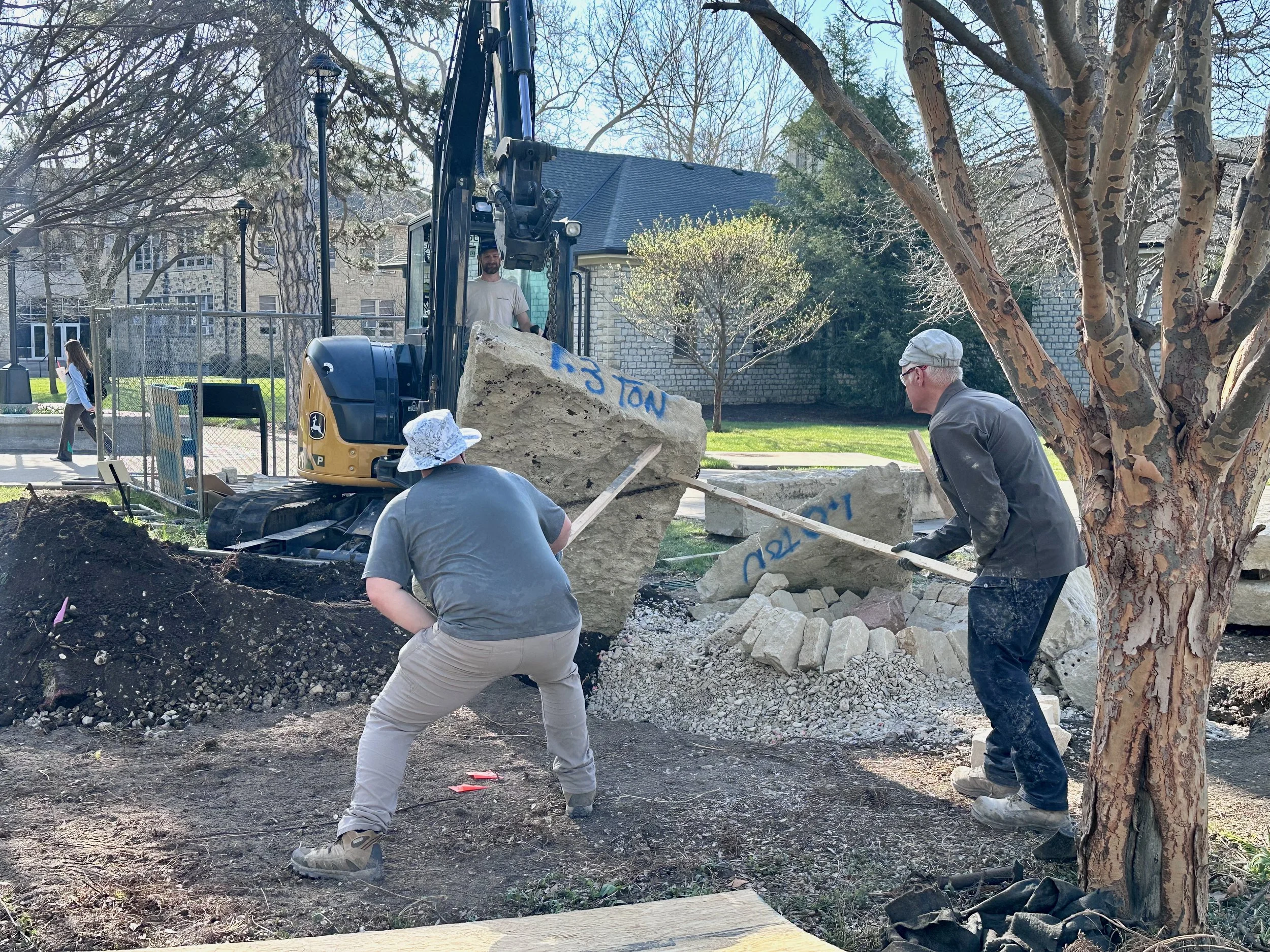
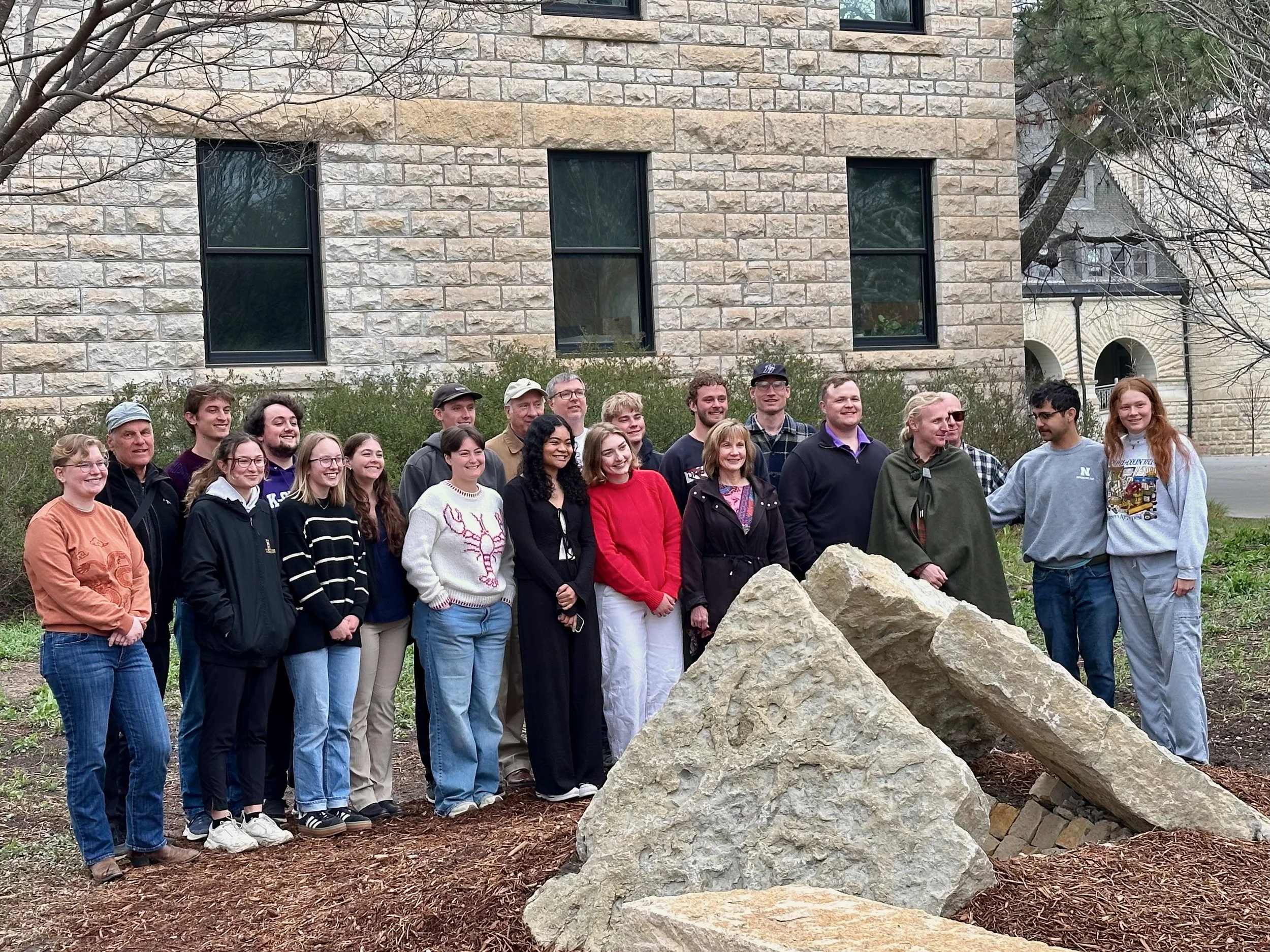
The lecture was a prelude to a week of classroom visits with Landscape Architecture students and leading them to construct a permanent dry stone art piece in front of their K-state LARCP building. The sculpture is titled “Prairie Trillium" after its resemblance to the blossoming of a wildflower that’s native to Kansas woodlands. In the flower, three petals unfold around a dense cluster of stamen. One-ton limestone slabs represent the petals and a granitic, glacial erratic stands in for the stamen. All materials were locally sourced.
Principal members of the production management team include Project Manager Elin Waagen, Graduate Student Nick Stone and Professor Howard Hahn. KSU Landscape Architecture & Regional & Community Planning faculty and administration members Michael A. McClure, Matthew "Quint" Redmond, Huston Gibson, Kirby Barrett, Jessica Canfield, Thom Jackson, Katie Kingery-Page, Jody Hodges, Heather Tourney and Diana McElwain were instrumental in making our experience at K-State a success and a pleasure. Kyle Weldon at U.S. Stone and Derek Taussig of Taussig Landscape went the extra mile with contributions of time, materials and equipment. Without them the sculpture installation would not have been possible. Lisa Johnson, Linda Craghead, Steve, Todd and Sean from Facilities were responsive to all our needs. Two dozen amazing LARCP students were fully engaged throughout my two week residency, especially Andrew, Taylor, Jace and JD during the days of sculpture fabrication.